


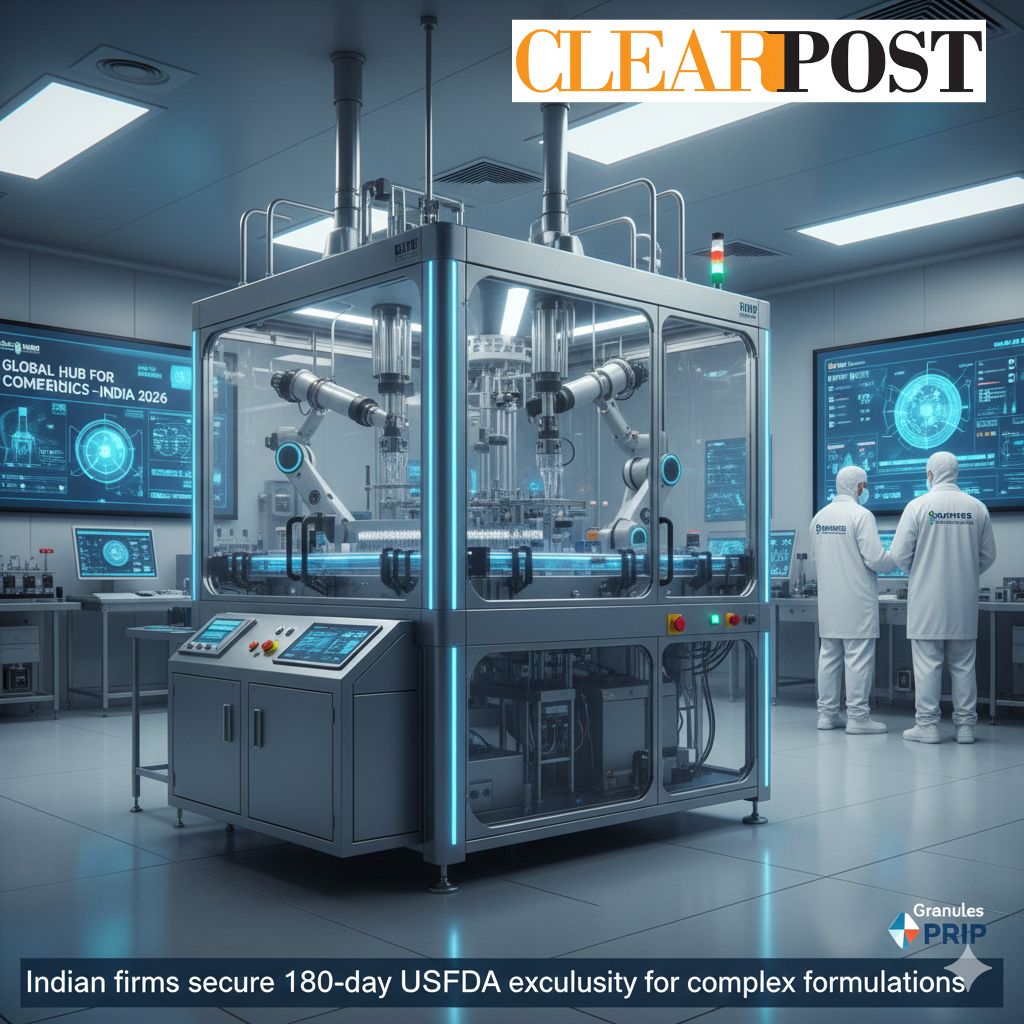
In January 2026, the Indian pharmaceutical industry is making a decisive shift from being the world’s “low-cost pharmacy” to becoming the Global Hub for Complex Generics. This move from volume to value is fueled by the PRIP (Promotion of Research and Innovation in Pharma MedTech) scheme and a strategic push to capture a share of the $300 billion worth of drugs set to lose patent exclusivity by 2030.
The Strategic Shift: From Volume to Value
For decades, India dominated the simple “small-molecule” generic market. In 2026, the industry has pivoted toward Complex Generics—drugs that are significantly harder to replicate due to complicated active ingredients, delivery systems, or manufacturing processes.
- Market Value: While India is the 3rd largest producer by volume, it ranks 14th by value. This transition aims to double the domestic market size to $130 billion by 2030.
- High Entry Barriers: Complex generics (like liposomal injectables or inhalers) offer higher profit margins and lower competition compared to traditional paracetamol or ibuprofen.
- Innovation over Imitation: Companies are now focusing on biosimilars, gene therapies, and specialty APIs rather than just “copycat” formulations.
Key Focus Areas in 2026
The “Complex Generic” portfolio in India now includes high-tech medical solutions that were once exclusive to Western MNCs:
| Category | Description | 2026 Impact |
| Complex Injectables | Liposomal, microsphere-based, and long-acting depot injections. | India now holds over 670 USFDA-approved sterile facilities. |
| Inhalation Products | Dry Powder Inhalers (DPIs) and Metered Dose Inhalers (MDIs) for asthma/COPD. | Indian firms are becoming preferred suppliers for EU and US markets. |
| Transdermal Patches | Advanced drug delivery through the skin. | Rapid growth in “patient-friendly” formats for chronic pain. |
| Biosimilars | Highly similar versions of complex biological medicines. | Targeted for oncology and autoimmune diseases. |
Government Support & Infrastructure
The Indian government has laid the groundwork for this “Superpower” status through targeted funding and policy:
- PRIP Scheme: A ₹5,000 crore initiative specifically funding R&D in complex generics and medical devices.
- Centers of Excellence: Seven NIPERs (National Institutes of Pharmaceutical Education & Research) have been converted into innovation hubs with a ₹700 crore grant to bridge academia and industry.
- Production Linked Incentive (PLI): Expanded to include high-value bulk drugs and KSMs (Key Starting Materials) to reduce dependence on imports from China.
The “First-to-File” Advantage
In early January 2026, Indian companies like Granules India and Senores Pharmaceuticals reported significant wins, including 180-day exclusivity from the USFDA for complex formulations.
- Regulatory Maturity: Approval timelines for certain categories have been slashed from 200 days to 60 days under the New Drugs and Clinical Trials Rules.
- Global Trust: Despite “Most-Favored-Nation” (MFN) pricing pressures in the US, Indian firms are gaining a competitive edge by aligning with the highest global quality standards (WHO, EMA, and FDA).
Industry Quote
“If 2025 was the year of intent, 2026 is the year of implementation. We are no longer just making medicines for the world; we are solving the world’s most complex drug formulation challenges.” — Sudarshan Jain, Secretary General, Indian Pharmaceutical Alliance (IPA)