


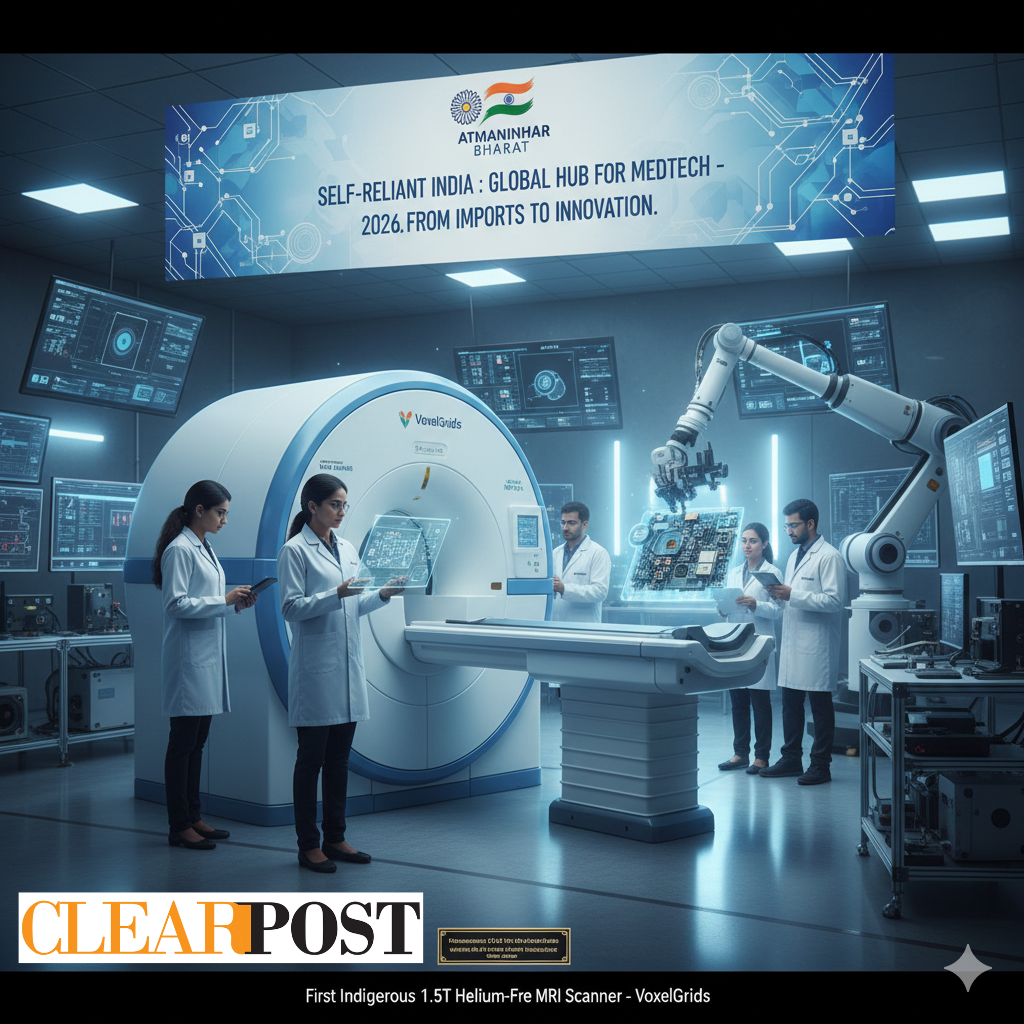
In January 2026, India’s mission to achieve “Atmanirbhar Bharat” (Self-Reliant India) in the medical device sector reached a critical turning point. Long dependent on imports for nearly 70-80% of its medical technology, the country has successfully pivoted toward domestic manufacturing of high-end, “Class C” and “Class D” (invasive) devices.
The transition from a “trader-based” to a “manufacturer-led” ecosystem is now saving the exchequer billions in import costs while positioning India as a global MedTech hub.
2026 Milestone: The SMDI Breakthrough
The government’s new ₹500 crore “Strengthening of Medical Device Industry” (SMDI) scheme, operational through 2027, has addressed the sector’s most persistent Achilles’ heel: component-level manufacturing.
- Marginal Investment Scheme: ₹180 crore has been specifically funneled to MSMEs to produce essential components (sensors, high-grade plastics, and specialized electronics) that were previously 100% imported.
- Domestic Share Surge: The share of domestically produced medical devices in the Indian market has jumped from under 10% in 2021 to 30% in early 2026.
- Cost Efficiency: Indigenous Class-C devices (like pacemakers and specialized catheters) are now being manufactured 10 to 40% cheaper than global competitors.
The PLI Impact: High-End Tech “Made in India”
By January 2026, the Production Linked Incentive (PLI) scheme has matured, moving beyond basic consumables to complex life-saving hardware:
- 22 Greenfield Projects: Large-scale plants are now fully operational, producing high-end equipment like Linear Accelerators (for cancer care), CT Scanners, and MRI machines.
- MRI Revolution: India’s first indigenous helium-free 1.5 Tesla MRI scanner (developed by VoxelGrids) is now being deployed in Tier-2 cities, drastically reducing both procurement and maintenance costs.
- Export Strength: For the first time, cumulative exports under the PLI scheme have crossed ₹6,000 crore, with Indian-made radiology and imaging devices heading to Southeast Asia, Africa, and the Middle East.
MedTech Parks & Infrastructure
The “Plug and Play” model of Medical Device Parks has entered its final implementation stage:
| Park Location | 2026 Status | Focus Areas |
| Greater Noida (UP) | 90% Complete | Radiology, Oncology, and Anaesthesia equipment. |
| Ujjain (MP) | Operational | High-end implants and cardio-respiratory devices. |
| Kanchipuram (TN) | Operational | In-vitro diagnostics (IVD) and electronic medical systems. |
| Common Facilities | Live | 13 state-of-the-art testing labs and a Gamma Radiation Centre for sterilization are now available to MSMEs. |
Regulatory & Skill Development
- Regulatory Stability: The Medical Devices Rules, 2017 have been fully streamlined in 2026. The number of registered manufacturers has exploded from 400 to over 4,000 in just five years.
- Skill Capacity: Special short-term and long-term MedTech engineering courses, supported by the Department of Pharmaceuticals, have started producing a “technically capable” workforce of over 10,000 specialists annually.
- Quality Branding: The ICMED (Indian Certification for Medical Devices) has become a globally recognized mark, helping “Brand India” compete with CE and FDA-certified products.
The 2030 Vision
With the current momentum, the Indian MedTech industry is on track to grow from an $11 billion market in 2023 to a $50 billion powerhouse by 2030, aiming for a 10% share of the global market by 2047.
“We are no longer just assembling parts; we are designing and developing the future of affordable global healthcare.” — Amit Agrawal, Secretary, Department of Pharmaceuticals