


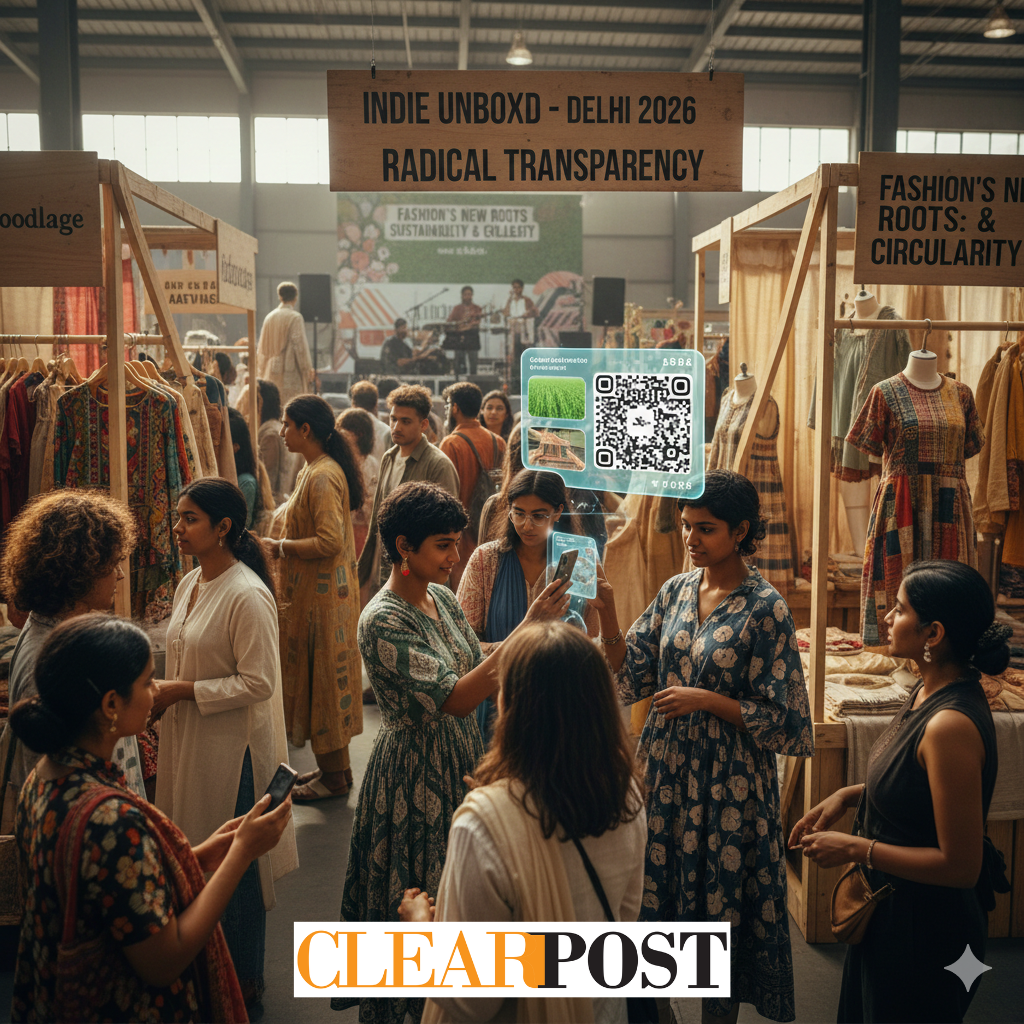
In January 2026, the Indian fashion industry is witnessing a “rebellion of the roots.” The era of mindless fast fashion is being challenged by a powerful Indie Fashion & Sustainability Takeover. Consumers, particularly Gen Z and Millennials, are no longer just buying clothes; they are investing in “stories, ethics, and circularity.”1
The shift is moving from mere “eco-friendly” labels to a complete Circular Economy where every garment is designed with its “end-of-life” in mind.2
The Rise of the “Conscious Wardrobe”
By early 2026, sustainability has evolved from a niche luxury to a core infrastructure for homegrown brands.
- Fibre-First Sustainability: The focus has moved to the source.3 Hemp, Organic Cotton, and Bio-based Polymers (derived from plants rather than petroleum) are now the standard for indie labels like B Label and No Nasties.4
- Zero-Waste Patterns: Designers are adopting “geometry-led” cutting techniques that ensure zero fabric waste. Brands like Doodlage and Ka-Sha have pioneered upcycling, turning factory leftovers into high-fashion streetwear.5
- The “Slow” Export: India is now globally recognized as a leader in “Ethical Scaling.” International markets are increasingly looking to Indian indie brands for their unique blend of ancient handloom heritage and modern sustainable manufacturing.
Indie Giants: The 2026 Trailblazers
A new league of “Indie Giants” has emerged, proving that profit and planet can coexist.
| Brand | Signature Move in 2026 | Impact Area |
| Doodlage | Fabric-from-Landfill: High-end streetwear made entirely from industrial waste. | Circularity & Upcycling |
| No Nasties | Plant-a-Tree Model: Every purchase triggers a tree-planting initiative in India. | Carbon Offsetting |
| Okhai | Artisan-Led AI: Using AI to connect 30,000+ rural women artisans directly to global buyers. | Social Equity & Craft |
| B Label (BOHECO) | Hemp Revolution: Mainstreaming breathable, carbon-negative hemp textiles. | Sustainable Fibres |
| Nilam India | Handmade Joy: Small-batch, AZO-free dyed clothing with 100% cotton. | Slow Fashion |
Key Trends Shaping the Takeover
1. Digital Fashion & Virtual Prototyping
To reduce physical waste, indie designers are using tools like CLO3D to create “Virtual Collections.” Customers can “try on” clothes via AR (Augmented Reality) before the garment is even stitched, moving the industry toward a Made-to-Order model.
2. The Return of the Handloom (Modernized)
2026 sees a massive revival of Chikankari, Khadi, and Block Prints but with a modern twist. Labels like Rias Jaipur and Aadyam Handwoven are creating “Modular Ethnic” pieces—versatile clothing that can be worn at a wedding or a board meeting.
3. Thrifting as an “Artistic Practice”6
The “Pre-loved” market is no longer just for bargains.7 Curated thrift platforms and Buy-Back Schemes (where brands give store credit for returning old clothes) have turned second-hand shopping into a status symbol for the environmentally conscious.
The “Indie Unboxd” Movement
In January 2026, festivals like Indie Unboxd in Delhi have become the “New Fashion Weeks.”
- Direct Access: These events bypass traditional retail, allowing 200+ homegrown brands to meet their “tribe” directly.
- Radical Transparency: Brands now use QR codes on labels that, when scanned, show the exact journey of the garment—from the farm to the weaver to the tailor.
“Sustainability in 2026 isn’t a marketing buzzword; it’s a survival strategy. The ‘Shining Shell’ of Indian fashion finally has a ‘Strong Spine’ of ethics.” — Fashion Analyst, Jan 2026