


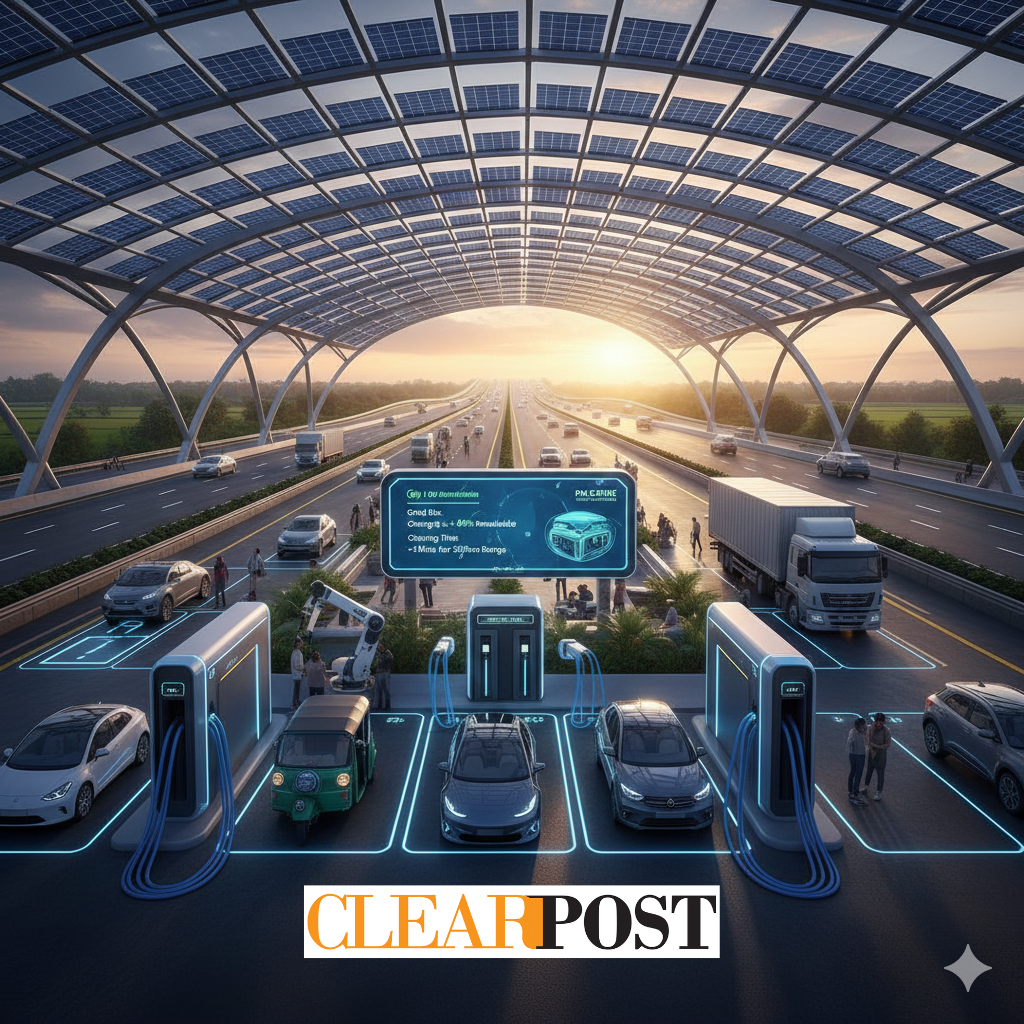
In January 2026, the global “Green Tech” sector has shifted from experimental to industrial scale, with the EV Charging Boom serving as its primary engine. In India, the landscape is defined by a massive push to bridge the “Reliability Gap,” as electric vehicle adoption outpaces the current charging network.
The 2026 India “Charging Blitz”
As of January 14, 2026, India’s public charging network has surpassed 27,000 stations, with a heavy concentration at traditional petrol pumps.
- The Fuel-to-Power Pivot: Public sector oil companies (IOCL, BPCL, HPCL) have successfully converted thousands of retail outlets into “Energy Stations.” These hubs now offer a mix of petrol, high-speed DC charging, and battery swapping.
- The PM E-DRIVE Effect: The new PM E-DRIVE scheme, which replaced FAME-II, has funneled massive subsidies toward “heavy-duty” infrastructure. This month, the government launched a dedicated push for e-Truck charging corridors on the Golden Quadrilateral.
- Urban vs. Rural Divide: While Delhi leads with one charger every 9km, the 2026 focus has shifted to “Tier-2” and “Tier-3” connectivity. State-led initiatives in Chandigarh and Karnataka are now being used as blueprints for national rollout due to their high uptime and solar-integrated stations.
Global Trends: “Invisible” & “Ultra-Fast” Charging
The 2026 boom isn’t just about more plugs; it’s about better technology.
1. The 5-Minute Charge
“Ultra-fast” is the new standard. In early 2026, next-generation 600 kW chargers are being deployed across European and Asian highways. These allow premium EVs with 800V architectures to gain 500 km of range in under 5 minutes, effectively matching the time it takes to fill a gas tank.
2. Wireless & “In-Motion” Charging
- Static Wireless: High-end residential complexes in 2026 now feature inductive charging pads. Drivers simply park over a pad, and the car charges at 11kW–22kW speeds without cables.
- Electric Highways: Sweden and Germany have inaugurated their first permanent electrified road sections, where heavy trucks charge via “dynamic induction” while cruising at 90 km/h.
3. V2G: Your Car as a Battery
2026 marks the mainstreaming of Vehicle-to-Grid (V2G). During peak heatwaves this month, EV owners in California and parts of India (via pilot projects) are being paid by utilities to discharge a small percentage of their car’s battery back into the grid to prevent blackouts.
Top Green Tech Metrics (Jan 2026)
| Metric | 2025 Status | Jan 2026 Achievement |
| Public Chargers (India) | ~12,000 | 27,432+ |
| Charging Ratio (India) | 20 EVs per 1 Charger | Aiming for 12:1 by Dec 2026 |
| Grid Mix (Renewables) | ~43% | 46% (Driven by Solar-Charging Hubs) |
| Battery Cost | $139/kWh | $98/kWh (Breaking the $100 barrier) |
The “Reliability Crisis”
Despite the boom, the industry faces a “Technical Debt” challenge. A January 2026 survey revealed that 73% of Indian EV owners have faced a failed charging attempt due to software glitches or hardware downtime. This has led to the rise of “CaaS” (Charging-as-a-Service), where private firms guarantee 99.9% uptime for commercial fleets.
“The 2026 challenge isn’t finding a charger; it’s finding one that works. We are moving from the ‘Quantity Phase’ to the ‘Quality Phase’ of green infrastructure.” — Infrastructure Analyst, Jan 2026