


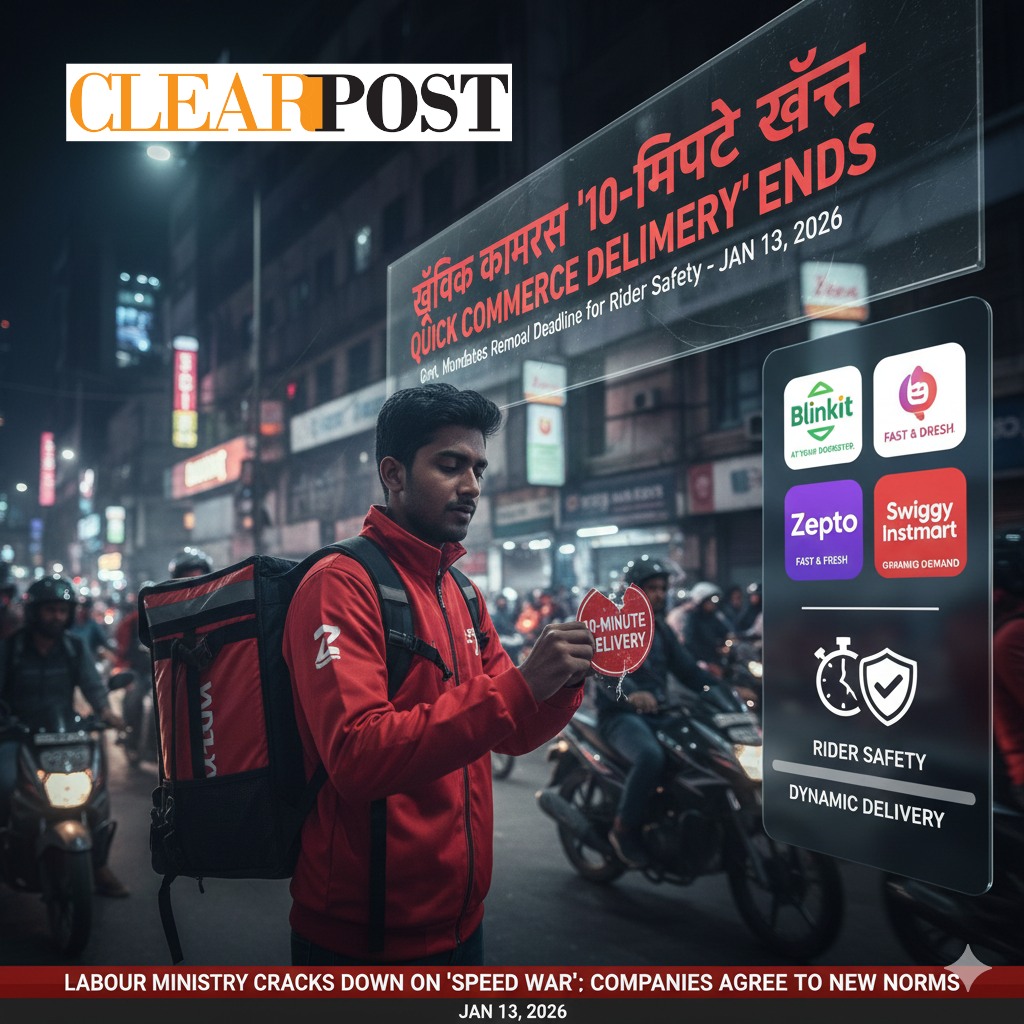
The aggressive “speed war” in India’s quick commerce sector has hit a regulatory roadblock. On Tuesday, January 13, 2026, the Union Labour Ministry intervened to end the mandatory “10-minute delivery” promise, citing serious concerns over the safety and well-being of gig workers.
Following a high-level meeting chaired by Union Labour Minister Mansukh Mandaviya, major players—including Blinkit, Zepto, Zomato, and Swiggy Instamart—have agreed to drop the 10-minute branding from their platforms and marketing.
The Regulatory Crackdown
The government’s primary concern is that hard-coded delivery deadlines create “undue psychological and physical pressure” on riders, leading to reckless driving and increased road accidents.
-
Mandatory Branding Removal: Platforms have been asked to stop using “10 minutes” as a marketing catchphrase.
-
Blinkit Leads the Way: Blinkit has already updated its tagline from “10,000+ products delivered in 10 minutes” to “30,000+ products delivered at your doorstep.”
-
Dynamic Timelines: While the backend technology (dark stores and AI routing) remains, platforms will now show “dynamic” delivery times to customers based on real-time traffic, weather, and rider availability, rather than a fixed countdown.
Why Now? The Catalyst for Change
Several factors converged in early 2026 to force this regulatory shift:
-
Nationwide Strikes: Gig workers held massive protests on December 25 and 31, 2025, demanding the removal of ultra-fast deadlines and better payout structures.
-
Social Security Code 2020: New rules that came into effect on November 21, 2025, now formally define ‘gig workers,’ mandating that platforms provide accident insurance and health benefits.
-
Parliamentary Pressure: AAP MP Raghav Chadha recently highlighted the “pain and misery” of delivery partners in the Rajya Sabha, even performing a delivery himself to demonstrate the stress of the 10-minute timer.
Impact on the Business Model
Industry experts believe this move is “largely optics-driven” and will not significantly slow down actual delivery times in dense urban areas.
| Feature | Pre-Regulation (2025) | Post-Regulation (2026) |
| Marketing Hook | “10-Minute Delivery” | Variety, Convenience, and “At your doorstep” |
| Rider Pressure | High (Stopwatch-based) | Moderate (No visible timer for riders) |
| Dark Store Logic | 2km radius / 2-min picking | Remains the same |
| Actual Speed | 8–12 Minutes | 10–20 Minutes (Dynamic) |
Note: Brokerage firm Elara Capital suggests that because metro users are already habituated to quick commerce, removing the “10-minute” label won’t hurt sales, as convenience—not just speed—is now the main driver.
New Social Security Rules for 2026
Under the new draft rules proposed this month, gig workers will now qualify for government-backed social security if they meet specific criteria:
-
Single Platform: Must work at least 90 days in a financial year.
-
Multiple Platforms: Must work a total of 120 days across aggregators.
-
Benefits: Access to Ayushman Bharat health insurance and a national social security fund financed by a 1–2% levy on the platforms’ annual turnover.
Would you like me to generate an image showing the rebranding of these apps, or should I track the stock market reaction for Zomato and Swiggy following this news?