


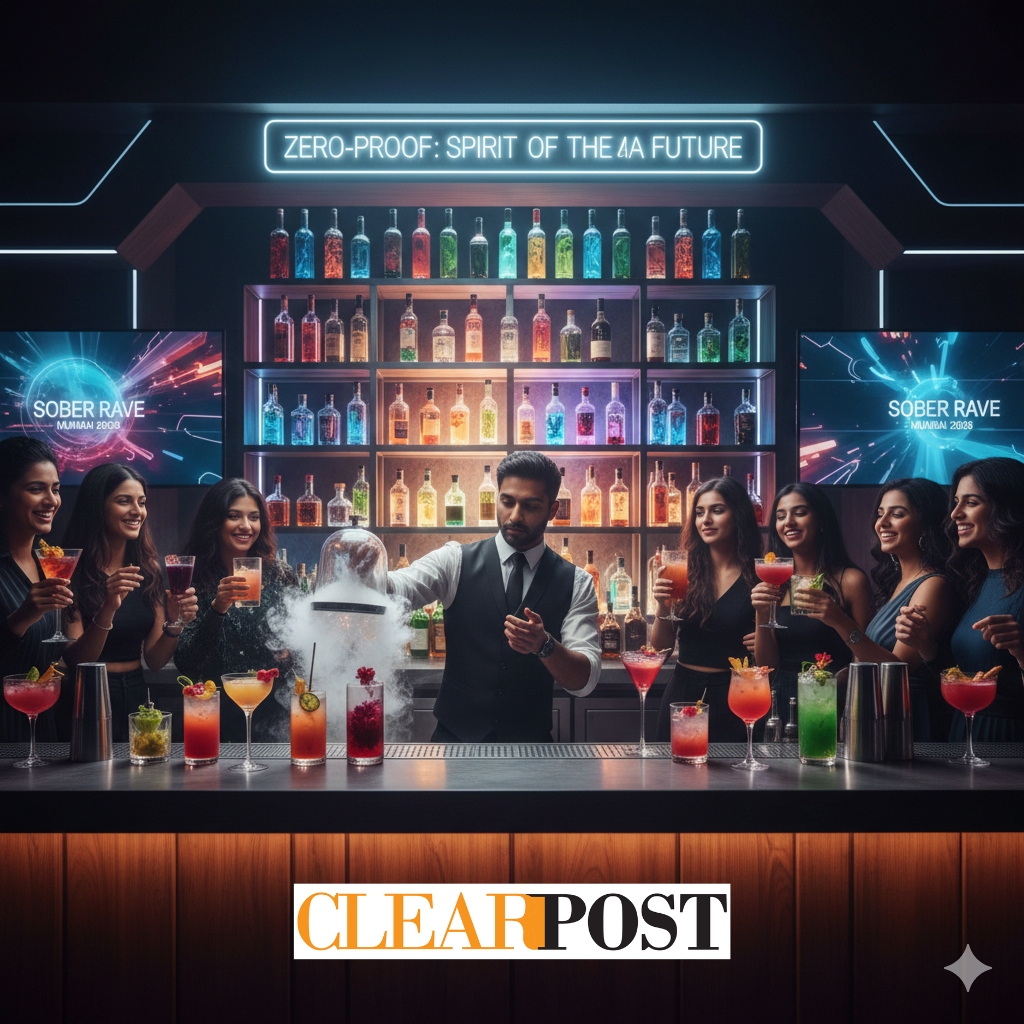
In January 2026, the global beverage landscape has shifted from “mocktails” to a sophisticated Zero-Proof Drinking Culture. Driven by Gen Z and the “Sober-Curious” movement, the focus is no longer on what’s missing from the glass, but on the craft, complexity, and ritual of the drink itself.
In India, this has transitioned from a niche health trend into a ₹2.10 lakh crore market (projected by 2029), with major cities like Mumbai, Delhi, and Bangalore leading the “Sober Rave” revolution.
The 2026 “Spirit” of Moderation
The term “Zero-Proof” has replaced “Mocktail” to signify drinks that use distilled non-alcoholic spirits, adaptogens, and complex botanicals to mimic the “burn” and mouthfeel of traditional alcohol.
- The Sober-Curious Majority: Nearly 50% of urban Indians in the 18–35 age bracket now identify as “sober-curious,” choosing to abstain for specific days, weeks, or indefinitely to prioritize mental clarity and physical performance.
- The “Third Space” Shift: Dry bars and “Sober Lounges” are the new social hubs. In Mumbai, venues like the Four Seasons have hosted “Sober Raves,” proving that the energy of a club can exist without the haze of alcohol.
- Economic Driver: Zero-proof cocktails are no longer cheap alternatives. They are priced similarly to alcoholic ones (ranging from ₹400 to ₹600 in premium bars) because they require the same level of R&D, distillation, and high-end garnishing.
Market Leaders: India’s Top Zero-Proof Brands
The Indian market is currently dominated by homegrown innovators who have cracked the code on “alcohol-free depth.”
| Brand | Specialty | 2026 Innovation |
| Sober | Distilled Spirits | India’s first distilled NA spirit using Ashwagandha and Tulsi for a “functional buzz.” |
| Coolberg | Craft Beer | Expanded into “Malt-based” Zero-Alcohol beers that mirror the bitter finish of an IPA. |
| Kati Patang (NOT) | Ready-to-Drink | Launched “Not Old Fashioned” and “Not Cosmopolitan” in sparkling cans. |
| Svami | Zero-Proof G&T | Mumbai-based brand dominating the RTD market with Pink G&T and Rum & Cola (0% ABV). |
| Chula | Luxury Wine | Focuses on de-alcoholized wines, including Pineapple and Ginger-infused variants. |
2026 Trend: “Functional Pouring”
In 2026, people aren’t just drinking for the lack of alcohol; they are drinking for supplementation.
- Nootropic Cocktails: Ingredients like Lion’s Mane and L-Theanine are being added to zero-proof drinks to provide focus and relaxation without the sedative effects of alcohol.
- Theatrical Mixology: Bars like The Bombay Canteen and O Pedro now report that zero-proof orders make up 15–20% of their total beverage revenue. They use “theatre” (smoke domes, dry ice, and edible art) to ensure the non-drinker has the same “Instagrammable” experience as everyone else.
Global Influence: The “Zoe Effect”
Influenced by global longevity experts and health tech (like the Zoe app), 2026 consumers are tracking their Glucose Spikes.
- Low-Sugar Focus: The “new” zero-proof drinks are moving away from sugary syrups and fruit juices toward Savory & Brine-based profiles—using olive brine, jalapeño, and vinegar-based shrubs to create “grown-up” flavors.
“We’ve moved past the ‘pity lemon soda’ for non-drinkers. In 2026, the most interesting person at the party is often the one holding the most complex, botanically-infused zero-proof glass.” — Vishakha Talreja, Beverage Analyst